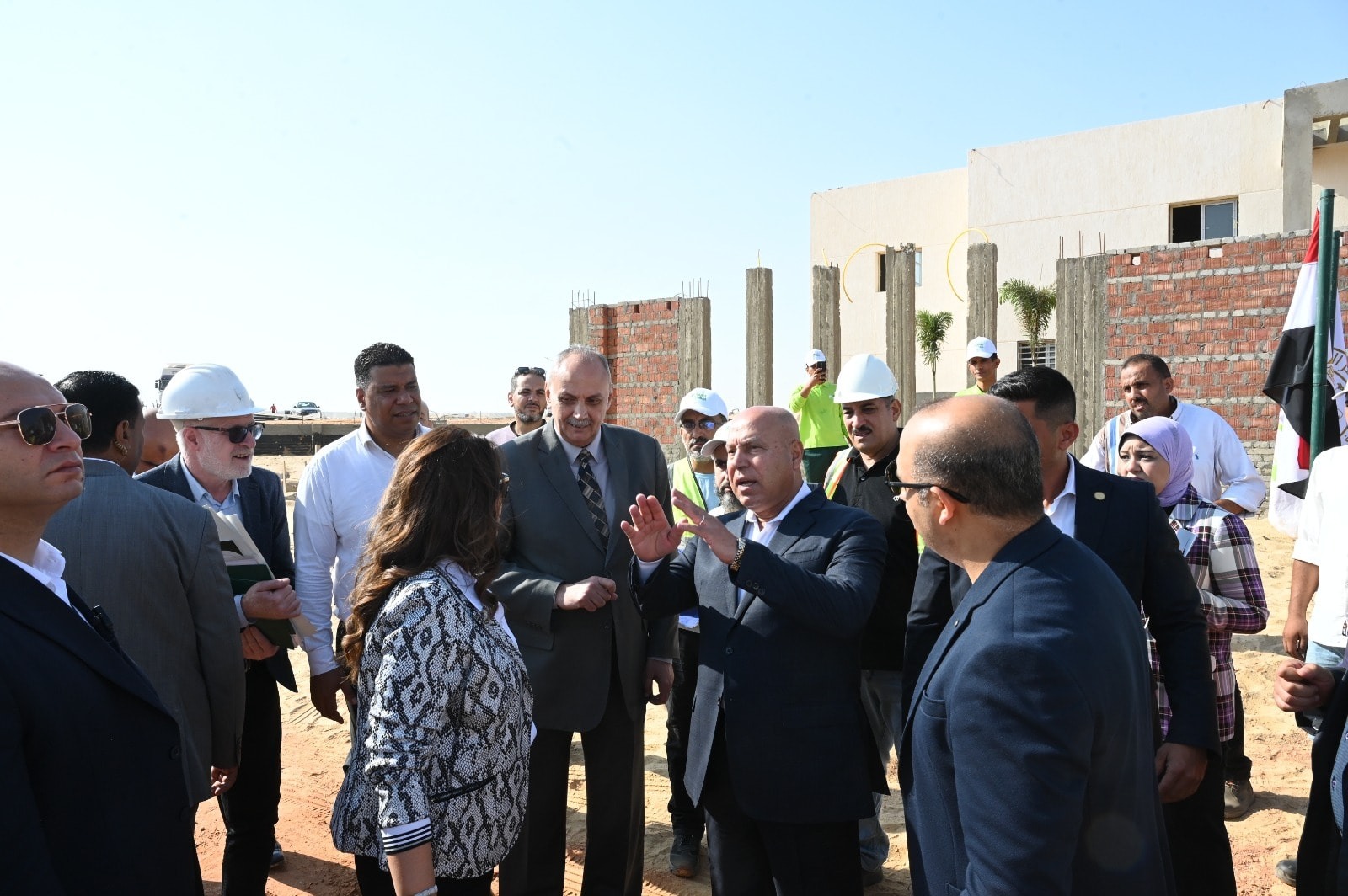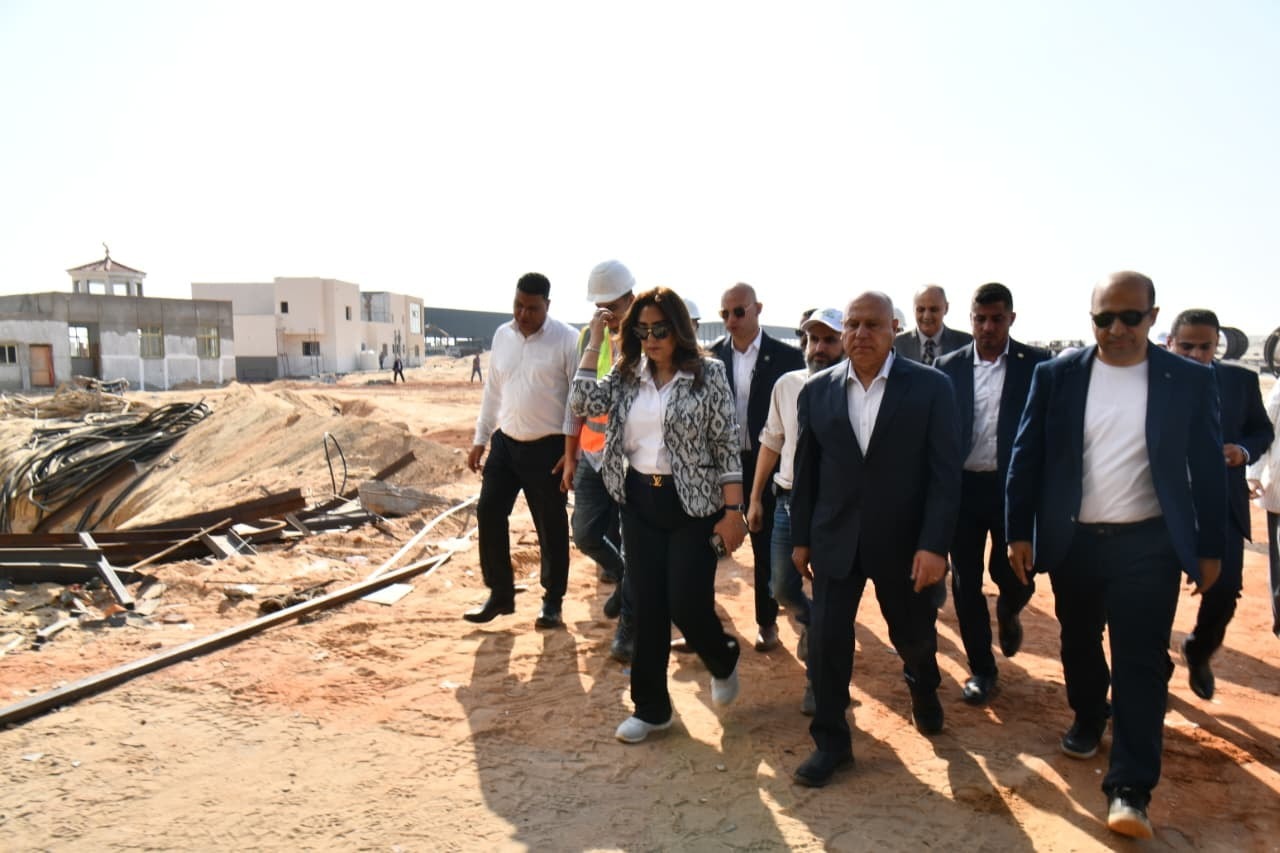


Lieutenant General Kamel El-Wazir, Deputy Prime Minister for Industrial Development and Minister of Industry and Transport, and Dr. Manal Awad, Minister of Local Development and Acting Minister of Environment, conducted an inspection tour of the integrated waste management complex in 10th of Ramadan City to monitor progress and workflow. The tour was attended by Dr. Nahed Youssef, Head of the Industrial Development Authority, Yasser Abdullah, Head of the Waste Management Regulatory Authority, several leaders from the Ministries of Industry and Environment, and the World Bank project team.
The tour was part of the ongoing monitoring of the project, funded by the World Bank with $200 million. The project aims to reduce air pollutant emissions resulting from open burning of waste and vehicle emissions, and to achieve optimal waste management, thereby contributing to improved quality of life and enhanced environmental sustainability.
The project encompasses the treatment of all types of waste, including municipal, industrial, medical, and construction and demolition waste, using the latest global technologies to ensure minimal sanitary landfilling and the site’s long-term sustainability.
During the tour, Dr. Mohamed Hassan, the project’s national coordinator, presented the detailed plan for the complex, including its various activities such as treatment plants for municipal, industrial, and medical waste, sanitary landfills, and special waste reception stations. He also outlined future plans for developing the infrastructure, roads, and various facilities, as well as the closure and rehabilitation of the Abu Zaabal landfill and the establishment of transfer stations in the Cairo and Qalyubia governorates.
During the tour, the Deputy Prime Minister for Industrial Development and Minister of Industry and Transport expressed his appreciation for the project’s underlying concept and the financing mechanisms provided by the World Bank. He emphasized that achieving the project’s true viability requires focusing on recycling and establishing factories to maximize the utilization of waste, converting it into fertilizers, energy, and alternative fuels, and reducing waste to near-zero levels. He directed those in charge of the project to prepare a detailed report outlining the final products extracted from demolition and construction waste, their sources, development, and the volume, percentage, and quantities of waste. He stressed that this economic dimension is fundamental to achieving the project’s objectives and ensuring its sustainability. He also indicated that he would present this matter for discussion within the Ministerial Group for Industrial Development to explore mechanisms for maximizing the project’s economic benefits and guaranteeing the best possible return for the country.
The minister also stressed the importance of coordinating with the General Authority for Roads, Bridges, and Land Transport to expedite the completion of connecting roads leading to the project, ensuring easy access and enhancing its operational efficiency. He emphasized the necessity of full adherence to engineering and technical standards in constructing the project’s internal roads to achieve the highest levels of quality and safety. Furthermore, he underscored the need for implementing a comprehensive governance system to guarantee maximum benefit from the substantial investments allocated to this strategic project.
The Deputy Prime Minister for Industrial Development and Minister of Industry and Transport also directed the establishment of specialized factories within the complex. These factories aim to transform rubble and demolition and construction waste into essential building materials and valuable construction products (interlocking pavers, tiles, bricks, and cement) from raw materials usable in construction and infrastructure projects. This will enhance the project’s economic return and support the state’s move towards a green economy.
For her part, Dr. Manal Awad, Minister of Local Development and Acting Minister of Environment, confirmed that all engineering designs for the integrated waste treatment city in 10th of Ramadan City have been completed, and construction is underway to finish the work as quickly as possible. The city aims to treat all types of waste, including municipal, industrial, demolition and construction, and medical waste. The latest global technologies will be used to achieve the lowest possible rate of landfilling for waste, ensuring the site’s sustainability for the longest possible period.
Dr. Awad also noted… Manal Awad stated that the project aligns with Egypt’s Vision 2030, the government’s work program, and the UN Sustainable Development Goals. It is being implemented through the Ministry of Environment, in constructive partnership with several ministries and agencies, including the Ministries of Local Development, Transport, Planning and Economic Development, International Cooperation, Health and Population, and Higher Education, as well as the governorates of Cairo, Giza, and Qalyubia, and the Cairo Public Transport Authority. The project also aims to maximize opportunities for private sector participation in all its activities, with a focus on expediting the completion of the project’s infrastructure and maximizing the economic benefits derived from all types of waste.
It is worth noting that the implementation of this strategic project reflects the state’s commitment to applying a modern and integrated waste management system that achieves environmental, economic, and social objectives. This system contributes to improving air quality and mitigating the effects of climate change. Furthermore, the project reflects the Egyptian government’s commitment to promoting sustainable industrial development and transitioning towards a green economy by maximizing resource utilization and transforming waste into added value that supports the state’s urban and industrial development plans, in accordance with Egypt’s Vision 2030.